THE TRIP on CBC
THE TRIP is confirmed to air on Sunday night, April 30th at 12:30AM ET/PT (so technically, the morning of Monday, May 1st) on CBC’s main network. CBC is Canada’s national broadcaster and this will be nation-wide. The film will be posted on the CBC Player online the following morning.
I am very glad for the film to finally meet its Canadian audience. Feel free to share your thoughts. For you night owls with TVs (a dying breed), check it out. This is a good one to see with family.
THE TRIP (2015) – trailer from Grace Wang on Vimeo.
一一
I watched YI YI for the first time in more than six years. I last wrote about it on February 19 2010, and I have no memory of the event except a vague sensation of how I felt as the words flowed through my veins. I remember sitting on a saggy couch with a sore back that my youth was still proudly upholding, typing rapidly, gut wrenching, aware of encountering a meaningful piece of work that I will revisit throughout my life. I was so young then, and a vastly different person from who I am today, yet somehow I knew that much.
And I was right. Watching the film again tonight, I felt a familiar pleasure and a deep resonance. The film plays differently for me now. It plays shorter and sweeter. I remember being hyper-aware of its “epicness” six years ago, seeing it in theater at a top 100 retrospective. It was emotional and long, and I grew restless at the end even while enraptured, trying to grasp onto the truth blooming around me. This time, the feeling is one of peace and understanding. I was utterly absorbed throughout the film, and I felt deeply attuned to its rhythm. I also watched it with a much more careful eye, aware of the craftsmanship behind the shots. It’s nice to know somewhat how far I have come.
What surprised me is that it made me want to write, about this film at least, again.
I haven’t felt that need in a long time. I absorb films in a different way now. I choose to do so privately instead of publicly. Making films rewire a person. Shifts your chemistry. Over the years, I had wondered if I will ever write about films again. People have asked and I have brushed it off. Maybe I lost that string in my violin, I thought. It’s nice to know that it’s still there, however rusty.
Reading my words from six years ago, I became nostalgic of my naivete. It reads like a different person. I don’t recognize my thoughts. I see my idealism and chuckle. I see my keen observations and I am glad. I see my excessive adjectives and flowery prose and I wince and feel grateful that I was that girl and that I outgrew that girl.
The characters who most grabbed my heartstrings last time were Sherry and NJ. Unrequited love, first love, those themes reverberated with my youthful disposition. I projected my own desires and heartbreaks onto them and tried to declare them as my own, and of course missed the point.
This time, it was the conversation between NJ and his wife Min Min, after her return from the mountains, that struck me. They sit on separate edges of the bed in their bedroom, out of reach and sight of each other, facing the camera. I relived my youth this past little while you are away, NJ lights up a cigarette. I thought it would be different, that if I had a chance to live life over maybe things would be different, but it turned out pretty much the same. Then I realize no matter what, it’ll probably turn out to be the same. He takes a drag silently. So even if there’s a second chance, I don’t think it’s necessary. Really not necessary. She nods in agreement with a small smile.
What does this say about me? Am I the wise one now?
I don’t know. I hope I grow more into Yang Yang, the little boy, who wants to show people what they can’t see because it will be fun, who jumps into the pool after learning in the sink, who doesn’t say much and sees a lot, who asks questions no one knows how to answer, who still has a lot of growing to do but already feels very old.
THE TRIP
My latest short film, THE TRIP, is currently playing on Air Canada’s Inflight Entertainment on the Canadian Movies channel. We will be playing until end of April 2016 on all domestic and international AC flights. If you find yourself on such a plane, please reach forward, turn on that little screen, select “Canadian Movies”, then “The Trip”, turn off the overhead lights, plug in your headphones, turn the volume up, and press “play.” Do NOT select “full screen” mode. And if the film touches you, please tell your neighbour. Trust me, it won’t be weird.
This film has come a long way. THE TRIP is a personal story about a complicated relationship set in northern Ontario, Canada. It is winner of the Toronto Reel Asian International Film Festival Pitch Competition and supported by National Film Board of Canada. Our world premiere took place at the Scarborough Worldwide Film Festival in Toronto last June where the film won the Audience Choice Award for Best Short Film, a pleasant surprise given that I didn’t even know there was a prize. We went on to screen in New York City in August as part of Cinema Club’s monthly short film showcase, a fantastic experience in a beautiful venue with an audience of film lovers. Could hear a pin drop during the film.
This is a story of two women written, directed, produced, shot, designed and edited by women of color, of which I am very proud of.
This is a hard film for me to talk about. It is my most personal film to date. Not autobiographical, and sometimes that is harder, because fiction allows you to explore things that exist beyond planes of real life.
The saving grace has been the audience responses to the film. Many people came up after a screening to tell me how the film touched them personally. I received emails from people who called their mother after the film and had a long conversation. I received emails of programmers showing the film to their students. I remember seeing my friend, sitting beside me during the premiere (chosen for her reliable coolness), repeatedly touching her face and thinking that maybe she was fidgeting because she’s bored, only to have her whisper to me as the credits rolled: “you jerk, you made me cry.”
All those things.
The past two years have been indescribable. They have been hard, because making art that is meaningful and sending it out into the world is hard. No regrets. Do the work. That is all I can do and will do.
Here is my first film poster. Designed and hand-drawn by the talented Tyler Rubenfeld, which captures the film wonderfully.

For updates on how you can see THE TRIP, please join the film’s official fb page.
LONESOME TOWN
Two years ago today, I shot this film.
At the time, I didn’t know the song, the sounds, the images awaiting ahead. I was seized with this feeling of something familiar and strange, something soft buried in the dampness of my chest, toward the back, against my stubborn, proud spine.
The sense of loss was palpable when I stepped off the train… it was my first time — a last minute decision on a last minute trip.
Then it hit me.
Coney Island was a postcard of dreams. I knew it before I knew America. Years of elegant decay had rendered a place whose magic, once captured beautifully on film, felt like remnants of a potent memory.
(shot on iPhone 4 in the time it took to eat a popsicle and dance a salsa.)
Official Selection:
2013 Scarborough Film Festival
2013 Toronto Reel Asian International Film Festival
2013 San Diego Asian Film Festival
2014 Milton Film Festival
2014 CAAMFest
Soul Train 2013

Made this mixtape for a friend’s cross country train journey, but we can all use a little soul in this season.
Happy holidays.
I REMEMBER

film still, I REMEMBER (2013)
In ten hours, I will share my first film, I REMEMBER, in a private screening with close friends and family in Toronto, in a cinema on top of the building that houses TIFF Lightbox.
It’s been a long road. From the six weeks, zero-budget conception-production, to the year long post grind, to the world premiere in February at Berlin International Directors Lounge, to the North American premiere in April opening Ebertfest before one of the most beautiful films ever in a 1500-seats restored 1920s theater, this has been surreal.
They say that your first film is unavoidably your most personal. It’s where you make mistakes and throw them away and laugh about them later. I never wanted to make that film. Naive and stubborn (laughably so), I made the film I wanted to make the only way I knew how – with brutal honesty and everything within my reach.
In the process I stumbled and cracked and fell and got up and got lost and doubted and questioned and wondered and learned, I learned so much. I made mistakes. I didn’t throw them away.
They were right about one thing: it is personal. Always.
No matter what happens tomorrow and the days after, I am incredibly grateful and proud of this film. I gave birth to it, now it is in the world, and it will find its own life. Hopefully, there is still a long way to go.
Complete filmography and related press links can be found in the Films tab on top of the home page.For Roger
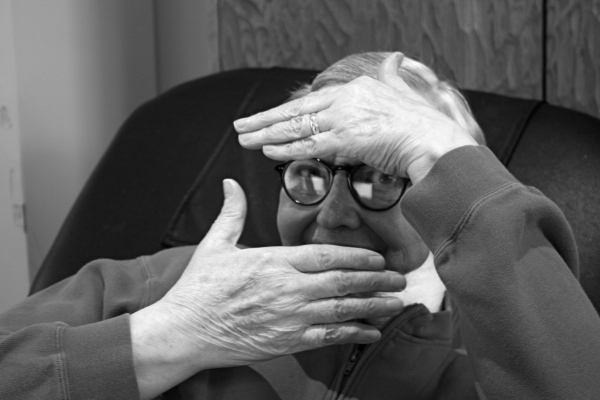
“Start writing. Short sentences. Describe it. Just describe it.”
Roger said, when I asked him about writer’s block. Then he quoted the first three paragraphs of his “Persona” review and told me that it had completely baffled him in 1967 but this strategy worked brilliantly. Tonight, as I sit here numbly staring at the screen with the hardest writer’s block I’ve ever known, I place my fingers on the keyboard to follow the advice of the greatest man I know, and just describe it.
How do you describe it? Knowing Roger Ebert. Most people gasp in delight at the mention of his name, usually followed by outpourings of affections, “I grew up reading him,” they would say, “I watched him every week!” The connection is always personal. The love deep.
I didn’t know him like that. I didn’t grow up reading him and only caught At The Movies on television occasionally. We met through the internet – as writers – after he had lost the ability to speak, and that is where majority of our conversations took place. It started with a comment about “The Hurt Locker” that quickly descended into emails, and haiku, and then there was never a reason to stop. Roger is a natural conversationalist and a collector of interesting people. He loved holding court, even virtually, and playing matchmaker linking people together, introducing and shuffling. He had an innate sense for character and impeccable judgment of situations and he was proud of that, telling me that it was a gift. He brought the Far-Flung Correspondents together, even though at the beginning I thought it was bold if presumptuous – who is going to read about a couple random strangers talk about movies on the net just because Roger Ebert decided they should? But he was delighted in the idea and convinced that it was valuable, and he proceeded to make it happen. I remember standing at a freezing bus stop one winter morning on my way to a soul-crunching job when I got the email from Roger asking me to write for him. Feeling inadequate, I asked for time to think about it. “Why?” He asked. “I don’t have any academic background in film,” I said. “And you think I did?” “But I’m not you!” “You’re not me, that’s why I need you on the site. You are going to end up in a very interesting place in this lifetime.”
Those words sank into me like a shot to the heart, and I have never forgotten them.
And that’s how he was: persistent, decisive, wise, and generous. He embraced people from all walks of life with all kinds of beliefs. He was incredibly open-minded and thoughtful. Intensely curious – if something caught his attention he will focus on it until he figures it out. He also had a great reserve of sympathy and used them with abandon, especially for those who need them. He kept up correspondences with people who he feared would be lost without them, for years. He forwarded to selected friends letters of cries for help that he would receive, sometimes a stranger’s devastating life story, and asked for support. He was always busy and on a deadline but these stories kept coming, and he always found time for them when he could.
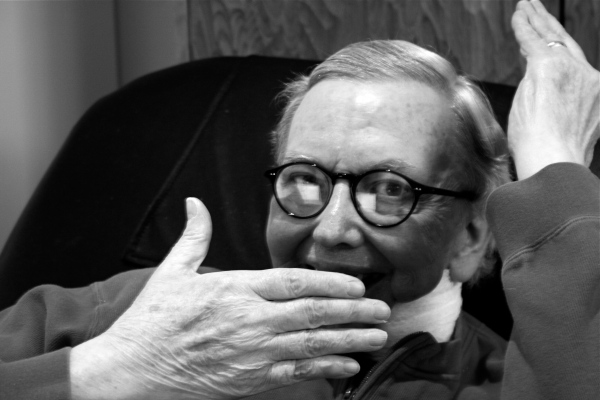
I’m making it sound like I know him, and out of the hundreds and thousands of emails we’ve exchanged perhaps I do know a part of him, but not all. He was an intensely private person and one who kept great many friends, to each he has a particular personal connection to. I can’t help but feel that every one of those lucky people would feel exactly how I feel, having been basked in the glow of such a generous and joyful spirit.
In our short time I did come to know one side of Roger: his poetic, idealistic side, and that is the one we bonded over. He loved haiku and appreciated the Romantic poets. He could quote Yeats at the drop of a hat and work sonnets into an otherwise mundane paragraph that makes you wonder how it could have existed without. His fierce intelligence was unparalleled, and you could sense the gears turning, jolting, from one to the other. It is not unlike him to cover topics of philosophy, politics, culture, and film all in one email, before finishing it with a poetic flourish.
And then there was Ebertfest, the annual gathering of all that he loved in his home town of Champaign-Urbana, Illinois. I, along with the rest of the FFCs, was inducted into the circle of guests four years ago and made to feel at once at home. Roger organized a special brunch just for the Correspondents in that first year, all of whom he had never met, and spent time with each person, asking about their families, looking at the gifts presented to him from foreign lands, and patiently jotting down concise and hilarious notes that he would then ask someone to read aloud. We sat there and looked forward to those notes, those brief moments of connections from him. We all loved him and admired him. He sat on a couch against the wall or on a special lazy-boy armchair at the back of the beautiful Virginia theater and people huddled around him, taking photos and asking for autographs and telling him how much he means to them. He patiently indulged every request. At times you could tell he wanted to say something but couldn’t before the moment was gone and it frustrated him, but he never let it slow him down. He was always there and he was loved.
And that was what it came down to: how deeply and fiercely and widely Roger was loved by all who knew and did not know him. He was that kind of person: an inimitable man, a passionate soul, generous spirit, and utterly one of a kind. Beyond it all, he made it personal. Always. He believed in goodness and he lived it, every day. He loved Chaz and his family completely and he told the world about them. Millions of people are mourning the loss of someone whose words have touched them and resonated with that of their own. He never spoke from above – even though he had the power – he spoke from the heart.
And it is from the heart that this deep hole will remain. I have been lucky to know him, to love him, to scribble random notes and long thoughts to him, to be privy to his friendship and his protection. It is a pure honor. To me, he was a complicated mix of protective big brother, patient mentor, and loyal friend. He accepted everything I had to offer, spotted what I didn’t even know I had, and nurtured them, as he did for many others. He sent me my first Criterion film and introduced me to Simenon, Colette, Cather, McCarthy. We talked about Bresson. “You know… when someone falls in love with Bresson, it’s the sign of a true cineaste. Not everybody does.” A few weeks later, Notes on the Cinematographer by Bresson arrived in the mail. I didn’t tell him about my first film until it was finished. He never asked why, only that I send a DVD instead of an online screener. Then he wrote me a beautiful note, and it was enough. I’m not sure why he believed, but I am so, so grateful.
And that is all. When I saw the news on twitter (which he fittingly got me onto), I stared for a full long while and then clicked refresh, and refresh, and refresh, until the condolences started to blur and my chest felt hollow. I cried. I called my dearest friends and told them what an amazing person he was and how it is unfair and how I wish there was more time, but there was not. Then I found myself walking outside, down streets, walking like Rog once loved to do. It was sunny and people were coming home from work and everyone looked happy, but I felt numb. Eventually I ended up at a park that overlooked the freeway down a grassy hill with the sun shining brightly and dogs running around, playing (he would’ve liked that). I picked a spot and sat down, clasped my hands, looked to the tallest tip of a lone power tower on the horizon and said my goodbyes. Then, a gust of wind blew by, and I thought maybe somewhere he is looking down and saying: Gracie, I’ll get back to you.
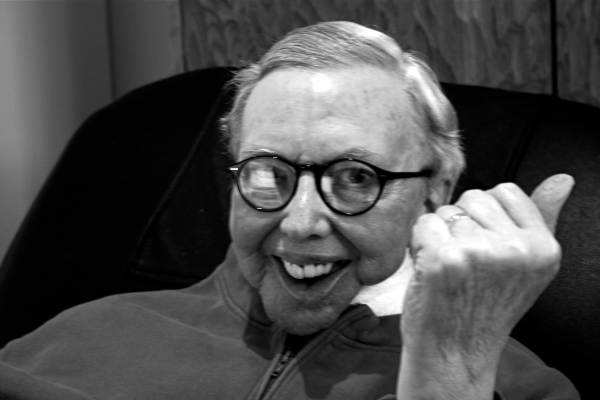
Chicago, May 2011. Photos by Grace Wang
Ten For The Heart

dusk beyond the pines, Tobermory
Wrote these a while back in the midst of summer for an article that I now cannot remember. The heat was blazing and my air-con weeping, hitherto these feverish thoughts remained in drawers of my mind up till now, too warm to the touch.
As I fidget by the window on this cool autumn night, stranded by words that seem to swirl in my chest instead of the blank page in front, I re-read these feverish thoughts, and they stirred me. Like fragments of lost memories newly discovered, I remembered the way hair stuck to the back of my neck as I scooted closer to the fan, tousling aside wrinkled sheets. I remembered staring at the screen so hard that when eventually I blinked, my breath slid out of my throat, like a small bird.
______________________________________________________________________
As with any top ten list, the following is deeply meaningful and really meaningless.
These are the films that have shaped my experiences of cinema profoundly, and for that I am grateful.
Chronological by year in no particular order:
CITY LIGHTS (Chaplin, 1931)
A film that brightens the gloomiest of days. Idealistic and whimsical, yet rooted in the very desires that drive our human existence: to see and to be seen. A true fairy tale, one I never tire of reliving.
LATE SPRING (Ozu, 1949)
A tale of parental love and familial devotion has never been told finer. A quiet story, even by Ozu standards. Frame by frame Setsuko Hara’s face speaks of a beauty that sustains and follows, while Chishu Ryu’s gaze returns a wisdom that beholds and releases. Love is unspeakable. Love is generous. Love is faithful. Love is to follow, to trust, and eventually, to let go. A purer filmmaker there is not. Ozu is truth. Ozu is grace. Ozu is life.
UMBERTO D. (De Sica, 1952)
My second criterion that arrived on a winter night with a note from a dear friend: “Grace, this one may bring a tear.” It did. A simple story about a simple love between a man and his dog, and in all the world there is no room for such simplicity and love. Emotionally devastating in its inevitability: when we reach the end of our ropes, how do we survive in an indifferent world with dignity?
SANSHO THE BALIFF (Mizoguchi, 1954)
The most beautiful melodrama ever existed on film. Motion poetry.
AU HASARD BALTHAZAR (Bresson, 1966)
A happy life requires us to find courage to accept the good when bestowed, and dignity to bear the bad when imposed. A lifetime told in the first five minutes, and then again and again and again. Bresson mystifies with his eye and in certain moments, I feel like I am standing right in the midst of the iris.
SCENES OF A MARRIAGE (Bergman, 1973)
An exhausting film that leaves in its wake as much damages as rewards. Bergman cuts and peels and digs and prods and when it feels like no more damage can be done and no more words can be said there is always one more wound, one more revelation, and everything remains the same, and never the same. I have not seen a more honest and truthful depiction of the relationship between a man and a woman. To watch is to understand what we are capable of; to live is to go on holding that knowledge, till the end.
THREE WOMEN (Altman, 1977)
Robert Altman! Robert Altman. What else is there to say? A true humanist who paints women in generous, multi-hued strokes. Hypnotic and free, perfectly casted and delivered, this is a story conceived in a dream and borne into another. The canary yellow, Shelley’s eyes, Sissy’s hair… I can’t get them out of my mind. The desert feels like a breeding ground for fantasies and horrors, cascading of dreamy strangers who arrive in the middle of the day and steal your heart, looking for a place to stay.
PARIS, TEXAS (Wenders, 1984)
A lone man appears; he is crossing this desert. The opening line from Sam Shepard’s poignant script encapsulates the soul of the film and its man, who is silent in his suffering and universal in its language. I remember everything from the first time I saw this: the road, the man, the boy, the girl, and most of all the light, so much light. Glow of the projector, warmth of celluloid, flickering of street lamps in the night, fading dusk across a highway overpass, desert sun, and that blue light in a small anonymous room, bathed across a man’s face as he started one of the greatest monologues in cinema, about these two people who loved each other and were once very happy. Wenders has the eye of an outsider and the soul of a poet. There will be no safety zone.
DAYS OF BEING WILD (Wong Kar-Wei, 1990)
WKW’s most intimate and personal film, and my favorite from the master of lush nostalgia and romantic longing. Harboring youthful seeds of themes that become fully matured in his later works, this is an achingly beautiful vision that feels urgent and necessary. Bracketed by two perfect scenes and peppered with shots of rolling blue-green rainforest that sway along Los Indios Tabajaras’ dreamy, haunting guitar riffs, here lies a youthful ode of passion to those days of being wild that is unforgettable.
YIYI (Yang, 2000)
Life in entirety. The world feels a little more lost every day without Edward Yang’s lens around. A one, and a two.
Waltzing in-between

This article is originally published in the Far-Flung Correspondents feature column on rogerebert.com
TAKE THIS WALTZ (2012) materialized out of a humid summer day in Toronto and made me tremble and fall in love… with who or what I’m not sure; the city yes, and maybe the idea of the in-between.
There is something incredibly delicate and beautiful about the thought of in-between: of that space of the possible, of movement, of choices being sought and yet to be made, of freedom and abandon and all the stuff that dreams are made of, but yet to solidify. It is a place of alchemy. Some call it a moment – a fleeting moment.
But how fleeting can a moment be? How long can flight of fancy last before running out of steam? How long can possibility behold, before crystallizing into another hard, undeniable piece of reality? What will we do with those pieces of reality? What will we do in the bubble of those moments, knowing full well what awaits us outside of them? These are the questions asked by Sarah Polley’s second directorial feature through its sun-drenched and color-bursting lens of Toronto, and it is luminous to watch.


 E t h e r i e l ~ M u s i n g s